
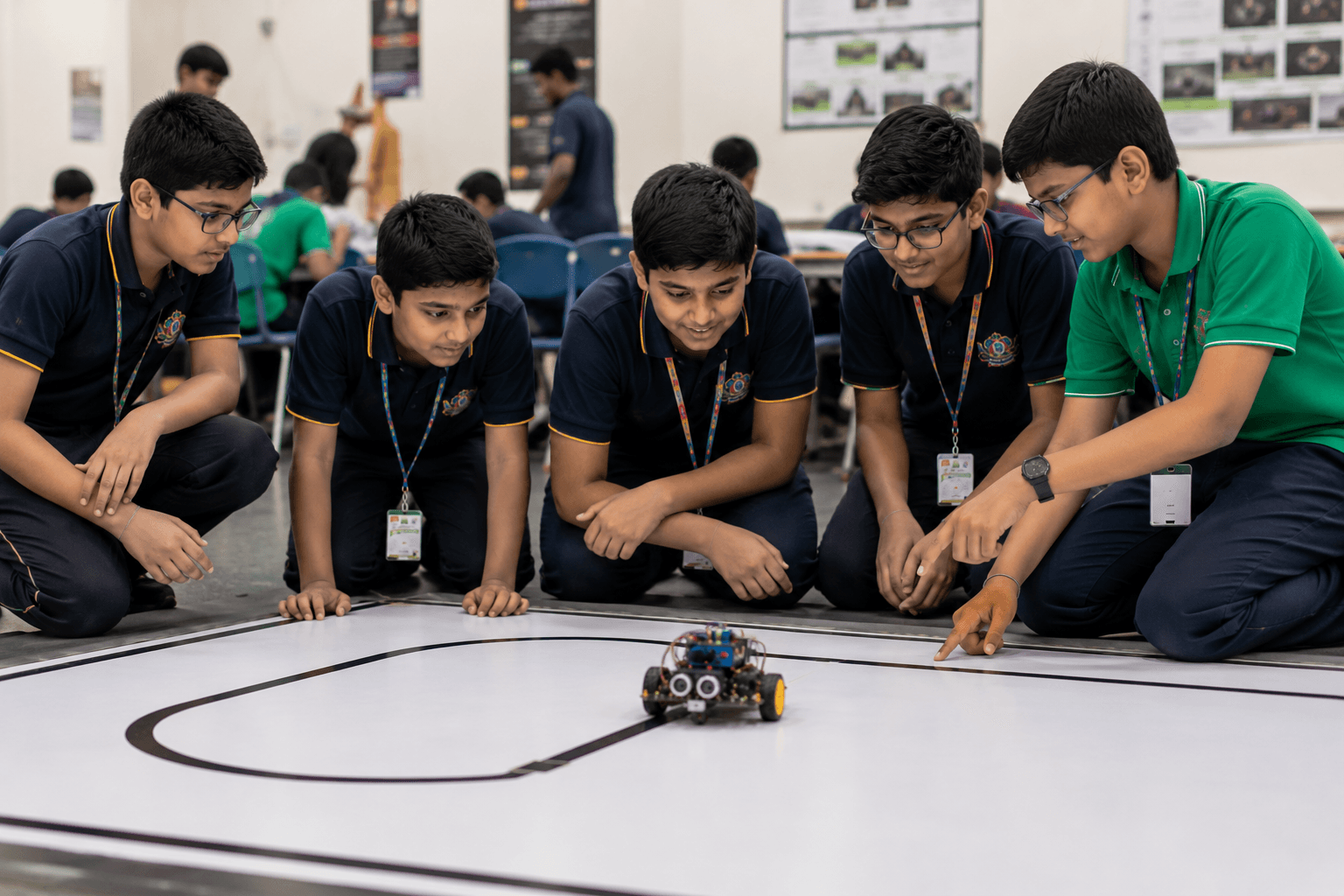
Maze Solver
Design and build a self-contained autonomous robot (Micromouse) that navigates a maze in the shortest time.
Medium1 day eventAlgorithmsSensorsPath PlanningMicromouseAutonomy
Overview
Participants are required to design and build a self-contained autonomous robot (Micromouse) that can navigate through a maze as quickly and efficiently as possible. The robot must enter the maze at the designated start cell and reach the finish zone in the shortest elapsed time. The competition encourages problem-solving, efficient decision-making algorithms, precision navigation, and robust autonomous control. Robots that solve the maze with the shortest successful run time will be ranked higher.
Rules
- •The robot must be fully autonomous and wireless; no external control, tethered devices, or wireless communication (Bluetooth, RF, Wi-Fi) during the run.
- •Robot must fit inside 15 cm × 15 cm × 15 cm at all times; max weight 5 kg (5% tolerance).
- •Robots must not jump, fly, climb, mark, damage, or destroy maze walls or flooring.
- •Human intervention during a run terminates that attempt. Best (shortest) run time is used for ranking.
Requirements
- •Fully autonomous Micromouse; wireless, self-contained
- •Within 15×15×15 cm, max 5 kg; sealed batteries, safe electronics
- •Onboard sensors and logic only; no external maze maps
- •Team of 2–10 members; one robot per team
Eligibility Criteria
- •The Maze Solver Challenge is open to all — schools, robotics clubs, colleges, universities, and independent teams are welcome to participate.
- •Teams may register across all age groups; there are no strict age limits in most competitive categories, making this suitable for school to advanced university teams.
- •Participation requires prior online registration via the official website before the competition deadline.
Team Participation
- •A team must consist of minimum 2 and maximum 10 members; this allows shared responsibilities for design, coding, and testing.
- •A team may register only one robot for this challenge.
- •Multiple teams from the same institution may compete, but each team must have its own robot.
- •Teams may optionally have one coach or technical advisor, who may observe but cannot touch or launch the robot during competition.
Robot Requirements
- •The robot must be fully autonomous — once started, it must make all decisions without external control or remote influence.
- •It must be wireless and self-contained; external power, wired controls, or any tethered devices are not permitted.
- •No wireless communication (Bluetooth, RF, Wi-Fi) is allowed between the robot and external devices during the run.
- •The robot must not use a combustion engine or other unsafe power source.
- •Robots must not leave any part of their body inside the maze — all components must exit cleanly at the end of the run.
- •Robots must not jump, fly, climb, mark, damage, or destroy maze walls or flooring; intentional interference with the maze structure will lead to disqualification.
Size & Dimensions
- •The robot must fit inside a 15 cm × 15 cm × 15 cm box at all times, including any folding or expandable parts.
- •Robots that change geometry during a run (e.g., deployable mechanisms) must still remain within the allowed footprint when fully expanded.
- •Maximum weight should not exceed 5 kg, including batteries and all components; a 5% weight tolerance may be allowed for minor variances.
Power & Safety Requirements
- •Robots must be powered by safe electrical sources only (e.g., sealed batteries); hazardous or unstable power sources are prohibited.
- •All wiring, battery mounts, and electronics must be securely fixed and safe to handle.
- •Robots must not produce magnetic, RF interference, or harmful radiation that could disrupt judging or other robots.
Maze Specifications
- •The maze will be disclosed only at the competition venue; teams do not see the layout beforehand.
- •The maze will consist of a grid of cells (typically up to 16 × 16 units), with walls defining pathways.
- •Unit squares often measure around 18 cm × 18 cm with walls approximately 5 cm tall and 1.2 cm thick.
- •Depending on event design, paths may include multiple possible routes, requiring efficient mapping or real-time decision logic by the robot.
- •Robots must not rely on external maze maps; solving should be based on onboard sensors and logic.
Competition Procedure
- •Each team will run one robot at a time through the maze.
- •Robots will be positioned at the designated start cell; time begins when the robot's front edge crosses the start marker or activation line.
- •The robot must then navigate the maze and reach the designated finish zone; the finish is typically the central cell of the maze in classic Micromouse layouts.
- •Human intervention is not allowed once the run begins; touching or adjusting a robot during a run will terminate that attempt.
Attempts & Time Limits
- •Each team is typically given up to 3 runs (or as defined by the event schedule).
- •The best (shortest) run time will be used for ranking.
- •If a robot does not reach the finish, it may still be ranked based on the maximum number of correct cells traversed without human assistance.
- •Organizers may impose a total time cap per team (e.g., 10 minutes across all attempts) based on event logistics.
Scoring & Ranking
- •The primary factor is fastest successful maze completion time.
- •In the event of less than three successful finishes, rankings may consider: number of cells traversed; consistency and efficiency of paths; judges' technical evaluation at their discretion.
- •Judges may request explanation of strategies or robot behavior if necessary.
Behavior & Fair Play
- •Deliberate interference with other robots or the maze field will result in disqualification.
- •Participants must respect other teams, referees, and the competition environment.
- •Misbehavior, unsportsmanlike conduct, or refusal to comply with judge instructions may lead to removal from the event.
Originality & Material Usage
- •Robots must be the original work of the team; use of pre-built competition bots with minimal modification is discouraged.
- •Standard components like microcontrollers, sensors, motors, and batteries are allowed.
Referee & Organizer Authority
- •Organizers reserve the right to revise rules for safety, fairness, or logistical needs.
- •Final decisions on scoring, disputes, and rule interpretations rest with the organizing committee and judges.
- •All decisions are final and binding upon participants.
Tags
AlgorithmsSensorsPath PlanningMicromouseAutonomy